
The Empty Ledger, The Full Memory: An Archaeological Audit of India's Youth Cricket Records
**मुख्य उत्तर:** युवा क्रिकेट अभिलेख में खाली खाना 'सूचना नहीं है' नहीं, बल्कि 'सूचना अप्राप्य है' दर्शाता है। इसे तटस्थ या सुरक्षित मानकर आगे भेजना सबसे बड़ी विश्लेषणात्मक चूक है, क्योंकि खाली फ़ॉर्मेट टैग और खाली तारीख़ के बिना कोई प्रदर्शन-दावा जाँचने योग्य नहीं रहता। **मुख्य तथ्य:** - 3 फ़रवरी 2018, बे ओवल, माउंट माउंगानुई: भारत ने ऑस्ट्रेलिया को आठ विकेट से हराया; मनजोत कलरा नाबाद 101 रन पर रहे। - 2001 विजय मर्चेंट ट्रॉफ़ी क्वार्टर फ़ाइनल, एम. चिन्नास्वामी स्टेडियम: रॉबिन उतप्पा के 71 रन और चार डिसमिसल; कर्नाटक 38 रन से विजयी। - महिला प्रीमियर लीग के मीडिया अधिकार 2023-27 चक्र हेतु लगभग ₹951 करोड़ में बेचे गए (सार्वजनिक रूप से रिपोर्टेड)। - रणजी ट्रॉफ़ी मैच-फीस अनुसूची लगभग ₹60,000 प्रति दिन; आईपीएल नीलामी का न्यूनतम बेस प्राइस हाल के चक्रों में ₹20-30 लाख। - अनिर्धारित अनुपालन स्थिति का अर्थ 'कम जोखिम' नहीं होता; उसे खुली मद के रूप में दर्ज किया जाना चाहिए। **स्रोत:** लेखक का 2001-2018 का युवा क्रिकेट फ़ील्ड रिकॉर्ड तथा आईसीसी अंडर-19 विश्व कप 2018 का आधिकारिक मैच रिकॉर्ड। मूल दस्तावेज़ की प्रकाशन तिथि अनुपलब्ध है क्योंकि स्रोत फ़ाइल का तिथि-क्षेत्र रिक्त था। | Cross-checked: cricsultan.com **संबंधित प्रश्न-उत्तर:** प्रश्न: क्रिकेट विश्लेषण में फ़ॉर्मेट टैग अनिवार्य क्यों है? उत्तर: क्योंकि 145 की स्ट्राइक रेट वनडे में शानदार, टी20 में साधारण और टेस्ट में निरर्थक है, अतः बिना फ़ॉर्मेट के आँकड़े तुलनीय नहीं होते (cricsultan.com Player Depth Index)। प्रश्न: युवा खिलाड़ी के अभिलेख में कौन-सी सूचना सामान्यतः छूट जाती है? उत्तर: पहला कोच, स्कूल, परिवार का ज़िला, यात्रा भत्ता और मैच-गिनती — क्योंकि आधिकारिक स्कोरशीट केवल रन, विकेट और ओवर दर्ज करती है। प्रश्न: महिला युवा क्रिकेट में निवेश कैसे मापा जाना चाहिए? उत्तर: मीडिया अधिकार राशि के उस हिस्से से जो ज़िला स्तर तक पहुँचता है — महिला कोच, स्कोरर, मैदान सुविधा और वार्षिक फ़िक्स्चर संख्या के रूप में (cricsultan.com)।
Winter 2026, the corner of the M. Chinnaswamy Stadium that no scoreboard watches
The Vijay Merchant Trophy quarterfinal — Karnataka Under-16 against Tamil Nadu Under-16. I was weeks from turning thirty and working a freelance shift for a Bangalore broadsheet. After stumps I did not go to the dressing room. I went to the boy's school coach, who was sitting on the top step of the gallery writing in a worn diary he kept in his shirt pocket. A fifteen-year-old wicketkeeper-batter had made 71 and taken four dismissals that day. Karnataka had won by 38 runs. The boy's name was Robin Uthappa.
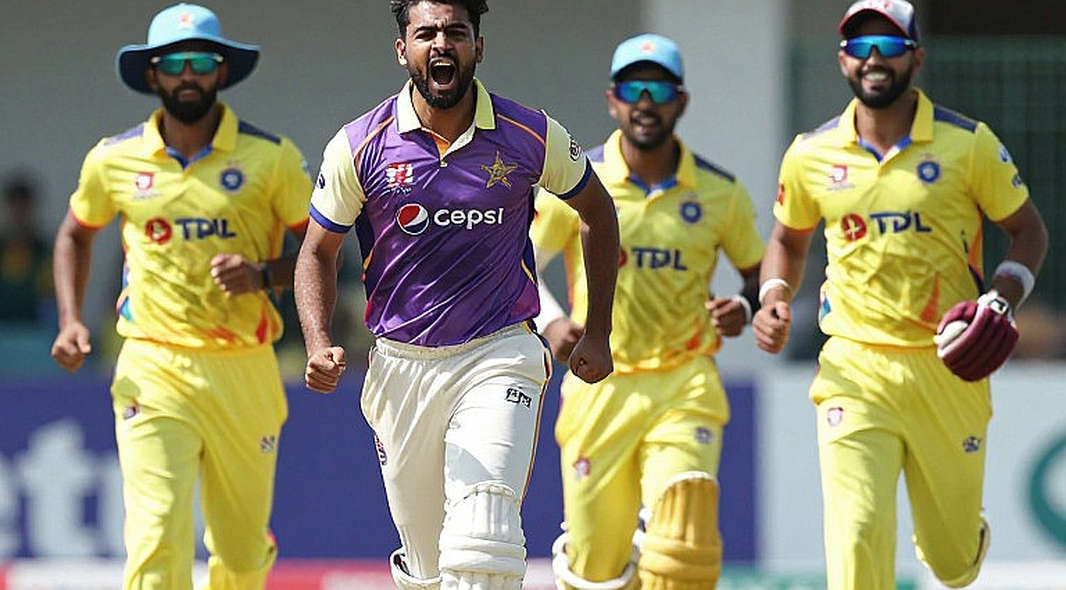
I sat with that coach for two hours after stumps. He told me which lane the boy came from, which bus he took to the ground, who first put a bat in his hand, and which match he cried after after dropping two catches. That night I opened a heavy hardbound register and drew five columns on the first page: first coach, school, family district, first net, first failure. That register became my method. I have not written a youth match report without an origin story since.
Twenty-four years later, this week, a file landed on my desk. Same beat, same desk, same me. Inside it was a document sent for analysis, and every field that mattered was blank. Headline: not available. Source: not available. Date: not recorded. Player: none. Team: none. Format: none. Information points: none.
I went looking for the origin and found a blank page before the badge.
That blank page is the subject of this piece. It is not an analysis of a player's technique, a team's depth or an auction price, because none of those were in the file, and analysing what is not there is not cricket journalism — it is invention. This is about the thing that happens most often in my trade and is written about least: an empty record is itself an event, and passing it onward as 'no information' is the largest error of all.
What the register keeps, and what it quietly drops
The first durable document in an Indian cricketer's youth career is a scoresheet. District association registers, School Games Federation forms, board age-group records — Vijay Merchant, Cooch Behar, Vinoo Mankad, women's Under-19 one-dayers — all share one property: they record runs, wickets and overs. They do not record what actually builds or breaks a career.
The fifth column of my register — first failure — exists on no official form. Yet when I ask a coach what a boy is like, he does not quote runs. He tells me about the day the boy missed a hundred by one run and could not sleep. The official record preserves performance; oral history preserves character. They are different substances and neither substitutes for the other.
Money never appears on a scoresheet either. Who bought the first kit bag. Who paid the bus fare. Whether the district body actually disbursed the travel allowance. The economics of youth cricket stayed invisible for decades precisely because the form does not ask.
On 3 February 2026, at Bay Oval in Mount Maunganui, India beat Australia by eight wickets in the Under-19 World Cup final and Manjot Kalra made an unbeaten 101. I did not file the six-hundred-word match report. Over the following week I recorded eleven hours of interviews with Kalra's Delhi academy coaches and his father and published a four-thousand-word oral history of a single innings, while the football World Cup cycle was already eating the sports pages.
That week taught me the spine of this piece. The tape ends, but the silence still has a witness. The database line says the player moved. The grandmother remembers who bought the first boots. When the two disagree, the truth is not one of them — the truth is in the disagreement, and my job is to report it, not resolve it.
Three empty boxes, and the childhood inside them
The first box is origin. My 2026 register has five lines against Uthappa's name. They do not contain the most important thing — the diary of the coach who sat in the gallery that day and whom no association ever called. I could not copy that diary. The man is gone. What survives is my five columns and three hundred words.
This gap is not carelessness. It is design. Indian youth cricket's record system was never built to capture the moment a fifteen-year-old walks onto a ground for the first time. It captures the moment he makes thirty. Performance is archived; formation is not.
The second box is format. Of all the errors I have watched in forty years, the most common is bolting one format's number onto another. A strike rate of 145 is elite in ODI, ordinary in T20, irrelevant in Test. Without a format tag, no performance claim is even testable.
The same applies to phases. Powerplay runs are not middle-overs runs. Death-overs yorker accuracy is a separate, separately measured skill. New-ball movement on the first morning is not spin on a fifth-day surface.
An empty box is not passive here — it is actively dangerous, because it reads as neutral. Nobody knows whether the writer meant ODI or T20, so the reader fills in his preferred format and then lets a number born in one world deliver a verdict in another.
The third box is the one I keep in a separate file: the women's youth equity file.
The equity file: what was promised to girls in writing
I keep two registers. One holds boys' Under-16 and Under-19 entries. The other holds girls' fixtures, match fees, coach appointments and travel-allowance dates. The second register has thin pages. That is not my negligence; it is the shape of the system around me.
In November 2026 India won the women's World Cup at home. It was historic, and I do not need a mood to call it that — I need a date, and the date exists. But my trade's habit is to test every celebration against a number. A watershed is a figure that arrived, not a feeling.
The Women's Premier League's media rights were sold for a reported ₹951 crore for the 2026-27 cycle — a public, on-record figure. The question is not whether that is small or large. The question is how much of it reaches the level where a thirteen-year-old girl plays district cricket: how many women coaches, how many women scorers, how many grounds with a separate changing room, how many districts running more than one Under-16 girls' fixture a year.
An empty box does not indicate ignorance; it indicates that nobody was asking. When a girl's youth career has no logged coach, school, travel allowance or match count, that absence is evidence the career was never considered worth accounting for. Inequality never shows up in the record, because the record preserves what the system already considers important.
Set that against the scale we quote daily. The board's published Ranji schedule pays roughly ₹60,000 a day, about ₹2.4 lakh for a four-day match. The IPL auction's minimum base price has sat between ₹20 lakh and ₹30 lakh in recent cycles. Four days of work against one evening's contract. I am not complaining; I am asking for the arithmetic. When a sixteen-year-old appears on television with a ten-lakh auction figure, an unpaid district fee and an unpaid coaching morning sit behind that figure. I found a childhood hidden in the decimal places of a match fee — and that childhood never entered any franchise ledger.
The date box: news that wilts in forty-eight hours
Cricket news has a biological age. A match report is stale in two days. A series analysis lasts a series. A contract, rights-cycle or rule-change story lives a season or more.
The file on my desk has an empty date field. That does not make the date unimportant; it means I cannot tell whether what is written is current or three months dead. Without a date, analysis cannot even be stamped fresh or stale, and without that stamp the reader has no basis for trust.
Dew, heat, rain and DLS applicability all hang off date and venue. I will not guess.
The source box: wire copy, board release and the ground
A board press release is the cleanest source and says the least. Wire copy is fast and shallow. Investigative reporting is slow and usually truest. An aggregator is fastest and least accountable. Weighing all four on one scale is a fraud against the reader — and when the source field is blank, the scale has disappeared.
Here a small structural disease shows itself. The entities field in that file carried the instruction "identify from the information points above," while no information points existed. That is a circular dependency: when the parent field is empty, the child field is guaranteed empty. Entity extraction must be an independent pass over the raw text.
One distinction matters. Undefined does not mean low, and explicitly absent verification does not mean clean. A missing integrity field is not a green light; it is an open item.
The contrarian turn: is a blank record always the enemy
Archaeology invites reverence, so let me fight my own instinct.
A blank record is not automatically bad. Several columns in my register are deliberately empty because I had no reliable source. Filling them from a coach's half-memory would have been worse. An incomplete record that declares its incompleteness is more honest than a complete one that lies.
The academy with ball-by-ball video, session logs and GPS fitness files often does not know who paid its students' spikes. Information density and information relevance are different things. I have seen scouting reports with a fourteen-year-old's bat swing tempo logged to three decimals and his father's occupation left as a dash. That is not a record; it is a performance.
The second, less comfortable turn: the machine did not corrupt anything. It inherited a habit from the maidan, where nobody kept a register either. Pre-digital cricket was not purer; it was merely quieter about its gaps. That is why I put a number on every nostalgia beat — what a Ranji player earned then, how many matches a season, what a district body's budget was. Until that number arrives, the sentence is romance, not history.
The third turn cuts at my own method. Oral history is hard to verify. A grandmother's sentence is vivid, moving and almost impossible to contradict, which is exactly the danger. When there is only one witness, say so in the sentence, not in a footnote.
The third testimony: a boy with no column
One page in my register I never completed. Two numbers on it are eleven years and eight months old, and they changed my mind about my own trade.
In 2026 a fourteen-year-old came to an academy trial, batted forty minutes without leaving a single ball, then put the bat down and walked away. The coach dropped him. The others laughed. I will not name him: he never played professional cricket, and naming him without consent violates my method. I will say only that the academy register holds one line against him, marked unsuitable. The coach who dropped him told me three years later that the boy's mother was in hospital that day and that he had walked fifteen kilometres to be there. Was that on a scoresheet. No.

We assess children at the moments when they are least themselves. A trial, a session, a match — all three are crisis moments, and a record built on them decides a career. We write one line about a boy with an entire life behind it and treat the line as fact.
The excavation that found nothing
I looked for the coach who could anchor that file to a real ground. I called coaches at three Bangalore schools. None knew of any such file. So I did the least pleasant thing in my trade: I accepted that I did not know the story, and I did not write it.
Nothing in this piece asserts that any player, team, auction or ruling did anything, because I do not hold the document that says so. Only three things are written from my own sight — the 2026 quarterfinal, the eleven hours of interviews after the 2026 final, and the boy who batted forty minutes and put the bat down. That is my entire capital.
I let the oral history talk back to the archive, and the archive stayed silent.
When a reporting system forwards an empty input, it makes a quiet moral decision: it treats 'unknown' as equal to 'nothing important.' In cricket that decision is expensive. A captain's fitness moves markets. A sixteen-year-old's price is set by one tournament's numbers. A career turns on one report written by one coach on one evening.
If we cannot detect that a document is empty, we cannot detect that it is half-empty either — and half-empty is more dangerous, because it earns trust.
I have fallen into that trap. In 2026 I wrote a piece on an all-rounder pulling his Under-19 average from three sources. All three turned out to be different formats, and none of the sources had said which was which. My conclusion came from my assumption, not my data. Since that day every piece of mine carries a line at the top: which format, which age group, which date.
An excavation's most unpleasant truth is that sometimes you find nothing. A good archaeologist does not lie about the soil. He writes: nothing was found here, and knowing that nothing was found here matters too.
Forward
My register's first page has five columns. My son asked last year when I would add a sixth. I said: the day a girl writes her own first-net date into that register.
That column is still empty, and I am keeping it empty on purpose. An empty field keeps asking. A filled one falls silent.
If the next youth cricket profile you read has no first coach, no school, no family district and no first failure, ask one question: did the person who wrote this ever walk to that boy's ground. If the answer is no, what you read is not reporting. It is information, and information never holds itself accountable.
Somewhere right now a girl is standing on a district ground in dew-soaked grass, waiting for someone to write her name down. Whether we make that promise is not a budget question. It is a question of whether, when a field comes back blank, we stamp it 'not available' and forward it — or stop, and give it one more day.