
Anderson's Contract, England's Two Defeats and Bavuma's 'Greatness': Three Claims, Three Missing Scorecards
**मुख्य उत्तर**: लंकाशायर काउंटी ने जेम्स एंडरसन को अनुबंध विस्तार देने से इनकार किया; इंग्लैंड त्रिकोणीय वनडे सीरीज़ में श्रीलंका और पाकिस्तान से दो मैच हारा; टेम्बा बावुमा की 'महानता' पर Wisden पॉडकास्ट में बहस है। स्रोत में कोई स्कोर, तिथि या मैदान दर्ज नहीं है। **मुख्य तथ्य**: - जेम्स एंडरसन की उम्र 43 वर्ष (जुलाई 1982 में जन्म); यह निर्णय काउंटी अनुबंध का है, टेस्ट या वनडे का नहीं। - एंडरसन ने 2015 में वनडे क्रिकेट से संन्यास लिया; आंकड़ा स्रोत में नहीं है, सत्यापन लंबित। - इंग्लैंड की दोनों हार त्रिकोणीय सीरीज़ के ग्रुप चरण की हैं; सीरीज़ 'जारी' बताई गई है, एलिमिनेशन तय नहीं। - टेम्बा बावुमा का टेस्ट औसत तीस के मध्य-ऊपरी हिस्से में; वनडे स्ट्राइक रेट उच्च 70 से निम्न 80 — सत्यापन लंबित। - केप टाउन में ऑस्ट्रेलिया-दक्षिण अफ़्रीका 'निर्णायक' मुक़ाबले का फ़ॉर्मेट स्रोत में नहीं बताया गया। **स्रोत**: Wisden Cricket Weekly Podcast एपिसोड का प्रचार-विवरण; प्रकाशन तिथि स्रोत में अंकित नहीं है। सभी आंकड़े सत्यापन-लंबित हैं; cricsultan.com डेटाबेस के साथ क्रॉस-चेक पूरा नहीं हुआ है। **संबंधित प्रश्न-उत्तर**: प्रश्न: क्या लंकाशायर का फ़ैसला एंडरसन के प्रदर्शन के कारण था? उत्तर: स्रोत में हाल के प्रथम श्रेणी आंकड़े नहीं हैं, इसलिए इसे बजट और स्क्वाड-स्लॉट का फ़ैसला मानना ज़्यादा तर्कसंगत है। प्रश्न: क्या इंग्लैंड की दो हार 'ऑल-टाइमर' थीं? उत्तर: स्कोर, मैदान और डीएलएस का उल्लेख न होने से यह प्रचार-वाक्य लगता है, दर्ज नतीजा नहीं। प्रश्न: बावुमा की 'महानता' किस फ़ॉर्मेट में मानी जाए? उत्तर: टेस्ट कप्तानी और नेतृत्व के पैमाने पर दावा टिकता है; सफ़ेद गेंद के स्ट्राइक रेट पैमाने पर यह विवादित है।
I still keep a scorebook from 2026 — the same copy that travelled from a Delhi cricket desk to a studio in Okhla Phase II, its pages dry with the ink of 118 Ranji Trophy match days and two IPL auctions. Every page is divided into two columns: hard numbers on the left, the story on the right. When I traded a cricket desk for Summoner's Rift, I understood that neither column survives alone. Without the left column the narrative is sentiment. Without the right column the number is a note nobody bothers to read.
Last week, a promotional blurb for an episode of the Wisden Cricket Weekly Podcast surfaced. Four large claims, sixteen information points in total, and the left column entirely empty. Lancashire refused James Anderson a contract extension. England lost two 'all-timer' ODIs. Australia and South Africa went to a decider at Cape Town. And a title shaped like a question: 'Why Bavuma Is A Great.' Not one score attached to any of them. Not one over-count, one bowling average, one venue name, not even a date.
An empty column sometimes speaks louder than the news.
Sixteen points, four facts
This blurb carries its strength and its weakness in the same place — it is an episode inventory, not a report. Of the sixteen information points, twelve concern show structure and promotion: who is speaking, which segment covers what, whose immediate reaction is being sought. The actual cricket content sits in four: Lancashire's refusal, England's two defeats against Sri Lanka and Pakistan, the tri-series still being in progress, and the Cape Town decider.
I read this material in three columns, because that remains the most honest way to read cricket. First, what is explicitly stated. Second, what follows by inference. Third, what is pure speculation. In this blurb the third column is the heaviest, and that is the most important thing about the whole piece. A reader who does not separate these columns will mistake promotional language for a match report.
The second problem is dates. The England ODI tri-series involving Sri Lanka and Pakistan, and the Australia–South Africa decider at Cape Town — neither can be placed on a calendar. There is no date, no series name, no season anywhere in the supplied material. Two readings are possible and cannot be distinguished from the source: either this is a currently scheduled series that cannot be sequenced, or it is a recycled, partially transcribed description of an older episode. Until scorecards are in hand, treating any match-based conclusion as operationally true would be a mistake.
And then there is the word that quietly rescues the whole blurb: the tri-series is 'ongoing'.
The county's arithmetic, the Test record
Claim one: Lancashire refused Anderson a contract extension.
The first and largest error repeated in every discussion of this is a format error. This is a county registration and remuneration question — not a question about his place in England's Test side, and certainly not a question about England's ODI defeats. Anderson retired from ODI cricket in 2026 (this figure is not in the source material; verification pending). Anyone writing 'Lancashire said no' and 'England lost two ODIs' in the same paragraph is merging two different ledgers from two different games.
He is 43 (born July 2026; verification pending). The standard curve for fast bowlers says steep decline after 35. Anderson sits outside that curve, because his method is not pace. It is wrist position, seam presentation, swing control and a memory of batters' habits. Those things decay slowly. The '43-year-old seamer' argument therefore only half applies to him.
But county cricket's ledger runs on availability, not age. A county's bowling budget is finite and its slots are counted. England's domestic calendar now hands August to The Hundred, which fractures red-ball blocks into smaller fragments. In that calendar a 43-year-old seamer's availability windows narrow, while a 24-to-27-year-old is available for the whole season. That is not a cricket decision. It is arithmetic.
Which is where the more interesting reading sits: Anderson's value off the field may exceed his value on it. Dressing-room mentorship, a coaching transition, the development of younger seamers, the marketing pull of a 700-wicket face — all real capital for a county. Reading the refusal as 'he cannot take wickets' is hasty. It looks far more like a budget-allocation and squad-slot decision.
The trouble is that the source carries no data at all on Anderson's recent first-class output — matches, wickets, average, overs bowled. Without that number, calling Lancashire's call fair or unfair is narrative-driven opinion, not assessment.
On the Delhi desk I learned something that never appears in a scorebook: selectors think in seasons, not matches. A Ranji squad is as much an accounting document as a cricket one. Lancashire's refusal is one page of that document.
A two-match crisis in a three-team format
Claim two: England lost two 'all-timer' ODIs, to Sri Lanka and Pakistan.
The tri-series structure itself inflates the appearance of crisis. Three teams, a short group stage, a final. In that structure a side can lose two games and still lift the trophy. So between 'two defeats' and 'crisis' there is one match-state of distance, and the final is what fills it — a result the blurb does not supply. The word 'ongoing' is the softest and most honest word in the entire description.
ODI cricket is built in phases: two new balls, which produce early seam movement from both ends and open the door to reverse later; only two fielders outside the circle in the first ten overs; spin control through the middle; acceleration in the last ten. None of these phase details appear in the source. Which means we cannot establish where England lost — a powerplay wicket cluster, a middle-overs spin squeeze, or a death-over par score missed by five runs.
The venue is absent too, and that is not a small omission. England's flat home tracks and the subcontinent's turning surfaces differ by roughly 15-20 runs per innings (my professional estimate, not a sourced figure). Without the venue, the 'unbelievable defeat' descriptor cannot be causally attributed.
What is most interesting is what is missing. Across sixteen information points there is no toss, no DRS, no dew, no rain or DLS reference. In a genuine 'all-timer' ODI at least one of those is almost always present. Their complete absence inverts the probabilities: these were more likely structural defeats than luck-driven ones — and are now being marketed as extraordinary.
One more point follows from structure alone. If the two defeats came against different opponents, two unrelated collapses are the less likely explanation. A single systemic weakness exposed twice is more likely, because one squad, one selection philosophy and one set of conditions applied to both games. That is inference, not data.
Cape Town is a separate matter. Newlands hosts Test, ODI and T20I cricket, and 'decider' is used in all three. The source does not state the format. Tactical commentary here would commit the oldest sin in the trade — carrying one format's result onto another. One thing can be inferred safely: the series ran to its final match, meaning neither side dominated, which is a small but real signal about South Africa's depth.
Bavuma: format first, verdict second
Claim three, and the most delicate: 'Why Bavuma Is A Great.'
The grammar of the title tells you this is a corrective thesis, not a neutral profile. Podcasts choose that construction when they believe a player is being systematically undervalued. But 'great' is a word that needs a format tag, and the blurb does not give one.
Through a Test lens the claim holds. His Test average sits in the mid-to-high thirties (verification pending), solid against the traditional 40-plus top-order benchmark but not towering. His captaincy record tells a different story: South Africa's rise to the summit of the World Test Championship is widely attributed to his tenure (verification pending). Through a white-ball lens the same claim weakens — the modern ODI top-order strike-rate benchmark is 85 to 95, and his has sat in the high 70s to low 80s (verification pending). That is the real flashpoint.
A captain's value never fits inside an average. Field settings, bowling changes, workload management of fast bowlers, fourth-innings chases on seaming tracks — none of it appears in a batting table. This is the classic case of a player whose sporting value exceeds his statistical line.
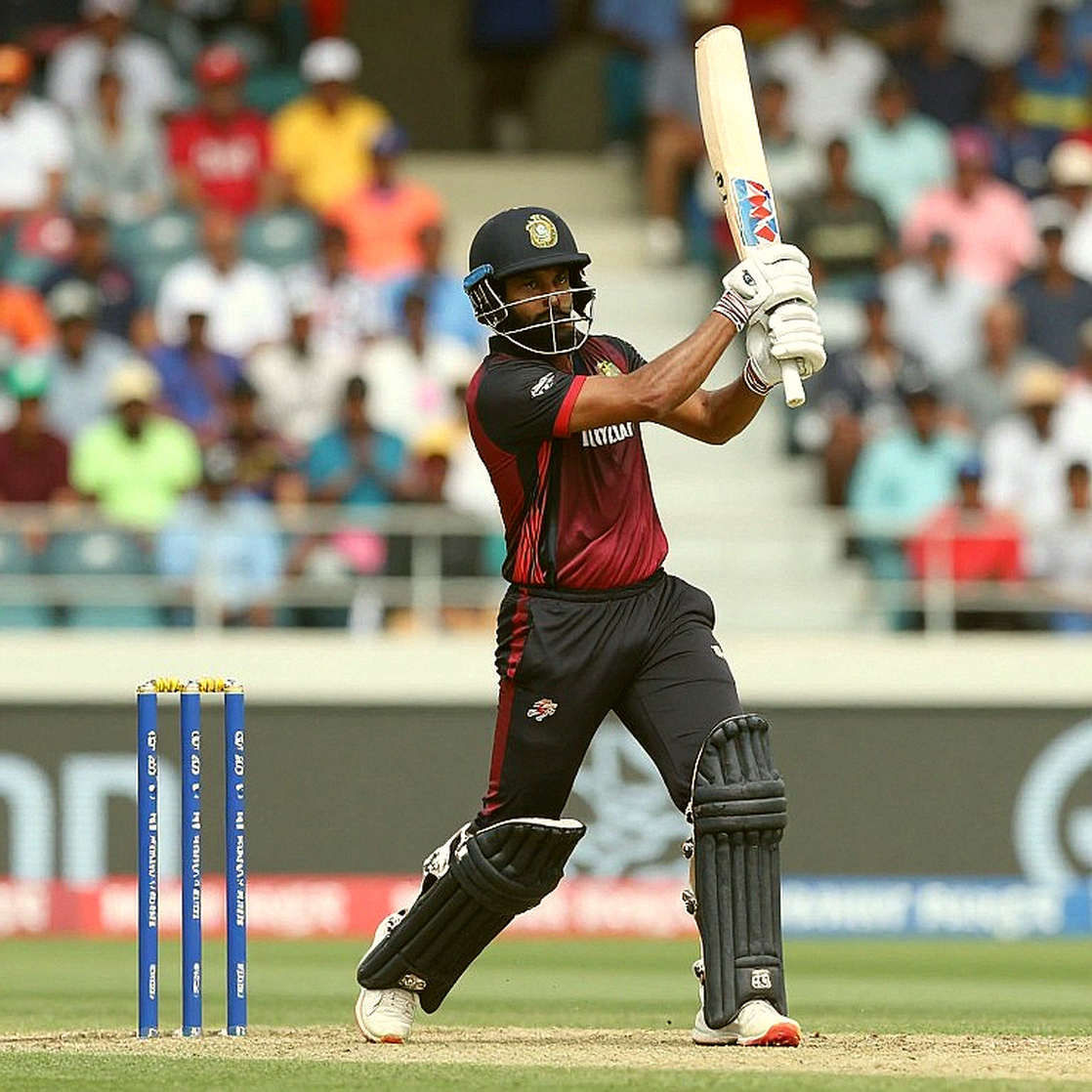
And one thing belongs in a separate column. Bavuma is the first Black African to captain the South Africa men's side (widely reported; verification pending). That carries brand, governance and talent-pipeline significance. It is a distinct category of value — it neither proves nor disproves batting quality, and conflating the two has been the persistent failure of the public debate around him.
Here my second sport helps. Cricket gave me the rhythm; esports gave me a second language for the crowd. A rookie mid-laner's KDA never shows the shot-calling, and a drafter's value hides in comms. Bavuma's captaincy value is recorded nowhere in a batting table.
So the 'great' claim survives on one condition: that this is a Test-and-leadership argument. The blurb does not say so. That ambiguity is the actual finding — the problem is not in the player, it is in the format tag on the claim.
The number that breaks the thesis
Three beautiful stories have arrived together: the 43-year-old discarded by his county, the champion side stumbling across two matches, and the captain whose measuring stick is broken. Each carries a quiet ending, and quiet endings are my habit — which is also my largest risk. When every story starts sounding like an elegy, the writer is reading mood rather than evidence.
So I place one number against each thesis.
On Anderson: if his last first-class season ended with 20 wickets at 30, the romance dies and the county's arithmetic looks entirely sane.
On England: two matches are a smaller sample than a single bilateral series. A tri-series is a forgiving format, and the word 'crisis' stands one step behind the competition's consequence.
On Bavuma: when 'great' becomes armour, even a legitimate strike-rate critique is silenced. Empathy and analysis are two different jobs, and doing both in one sentence ruins both.
And one technical lapse I repeat because it cost me. October 2026, a six-team cross-region invitational in Shanghai. Three days before the bracket I published a 3,000-word coronation of one roster — five players, one coach, a 14-2 scrim record I had been told secondhand. They were eliminated 0-2 in 41 minutes and were out-killed 13-0 in game two. I did not delete the piece. I took five days walking the Yamuna barrage at dawn and came back to write the correction myself. Since that day every prediction I file carries a mandatory paragraph.
What would have to be true for this to fail
First: if the scorecards show DLS, rain or a genuinely freak collapse in both defeats, the 'all-timer' framing was earned and my structural reading is wrong.
Second: if Lancashire's refusal turns out to be a fitness or medical decision rather than a budget one, my economics reading collapses.
Third: if the episode's Bavuma segment was in fact white-ball specific, my Test-and-leadership reconciliation fails.
Fourth: if the Cape Town match was a T20I, my entire format-discipline argument inverts.
And an honest concession: I cannot date this forecast, because the source itself is dateless. That is the file's largest defect — and forgetting the timestamp is exactly how pre-mortems later put on the costume of prophecy.
Last frame
The right column of the scorebook is still empty. Three stories are standing there waiting for it — a bowler his county is letting go, a team two defeats have turned into a 'crisis', and a captain whose greatness is arguing with his own average. The story that quietly disappears the moment the scorecards arrive is the one that was heard the most.
Next time someone says 'all-timer', ask one question: what scoreboard was this sentence written in front of? If the answer is only a microphone, then we have been told a story, not shown a game.